


Views: 0 Author: Site Editor Publish Time: 2025-11-14 Origin: Site


3D printing has evolved rapidly, transforming industries with its versatility. But with so many technologies available, which one should you choose?
In this article, we'll explore the ins and outs of FDM 3D printing and how it compares to other popular methods like SLA, DLP, and SLS. You’ll discover key differences in cost, material options, print quality, and durability, helping you choose the right technology for your needs.
Cost-Effectiveness: FDM is the most affordable 3D printing technology, ideal for quick and low-cost production.
Material Flexibility: FDM supports a wide range of thermoplastic materials like PLA, ABS, and Nylon, which are useful for different applications.
Resolution and Detail: While FDM has lower resolution compared to SLA and DLP, it is suitable for functional parts and large-scale manufacturing.
Durability and Strength: FDM produces durable parts, but with anisotropy in strength, meaning parts are weaker along the Z-axis compared to other technologies.
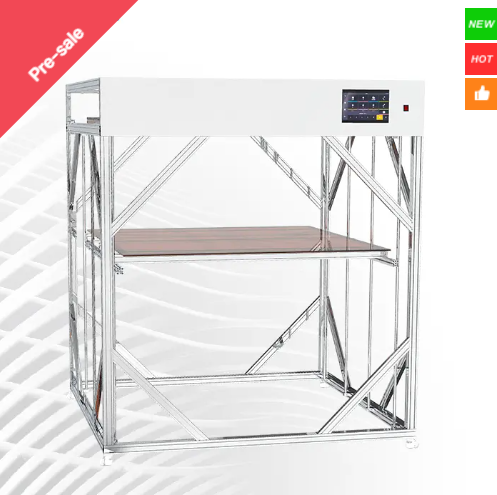
FDM uses thermoplastic filament that is heated and extruded through a nozzle to build parts layer by layer. The extruder deposits molten plastic on the build platform, which cools and solidifies quickly, allowing the creation of 3D objects from a 3D model. The technology is relatively simple, requiring minimal setup and maintenance.
FDM printing is widely used for various applications, including:
Prototyping: Quick and cost-effective production of functional prototypes.
End-Use Parts: Production of custom parts for industries like automotive, aerospace, and consumer products.
Large-Scale Manufacturing: Creating components such as jigs and fixtures used in manufacturing processes.
| Pros | Cons |
|---|---|
| Cost-effective and affordable | Lower resolution and visible layer lines |
| Wide material selection (PLA, ABS, Nylon) | Anisotropy in strength, weaker along Z-axis |
| Easy to use, minimal setup | Limited surface finish, requires post-processing |
| Suitable for functional parts | Slower printing speed for high-detail items |
| Technology | Material | Process |
|---|---|---|
| FDM | Thermoplastic filament | Extrusion of melted filament layer by layer. |
| SLA | Photopolymer resin | UV light cures resin layer by layer. |
SLA: Known for its higher resolution and smooth surface finish, SLA excels in creating intricate and highly detailed parts.
FDM: The resolution of FDM is lower, and parts tend to have visible layer lines, requiring additional post-processing for a smooth finish.
SLA: While SLA parts offer fine details, they are often brittle and not suitable for high-strength applications.
FDM: FDM parts are generally stronger and more durable, especially when made with materials like ABS and Nylon, making them suitable for functional applications.
| Technology | Material | Process |
|---|---|---|
| FDM | Thermoplastic filament | Layer-by-layer extrusion of heated filament. |
| DLP | Liquid photopolymer resin | UV light cures resin layer by layer using a projector. |
DLP: Produces parts with superior precision and smooth surface finishes, ideal for applications that require fine details.
FDM: While FDM can produce functional parts, it often leaves visible layer lines on the surface.
DLP: Faster than FDM as it cures multiple pixels at once, producing high-resolution prints quickly.
FDM: Slower, particularly when creating high-detail parts, but offers more material flexibility.
DLP: Primarily limited to photopolymer resins.
FDM: Offers a broader range of thermoplastics, including PLA, ABS, Nylon, and flexible materials like TPU.
DLP: Higher initial cost due to specialized equipment and the need for post-processing.
FDM: Lower cost of entry with simpler machines and less complex post-processing, making it more accessible.
| Technology | Material | Process |
|---|---|---|
| FDM | Thermoplastic filament | Extrusion of heated filament to create layers. |
| SLS | Powdered materials (e.g., nylon, metals) | Laser sinters powder layer by layer. |
SLS: Produces isotropic parts, meaning they have equal strength in all directions, making them ideal for functional applications that require high durability.
FDM: Parts made with FDM are anisotropic and tend to be weaker along the Z-axis, although they are more durable in general.
SLS: Can use a variety of materials, including metals, nylon, and ceramics, offering a broader range of applications.
FDM: Limited to thermoplastics but offers flexibility in terms of material properties and customization.
| Technology | Material | Surface Finish |
|---|---|---|
| PolyJet | Photopolymer resin | High precision with smooth surface finish and multiple material properties. |
| FDM | Thermoplastic filament | Visible layer lines, requiring post-processing for a smoother finish. |
PolyJet: Best for concept models, visual prototypes, and parts that require high detail and multiple material properties.
FDM: Ideal for functional parts, large-scale printing, and low-cost prototyping.
| Technology | Speed | Precision | Cost |
|---|---|---|---|
| PolyJet | Slower due to high precision | High precision, fine details | Expensive due to materials and technology |
| FDM | Faster than PolyJet | Lower resolution and visible layer lines | More cost-effective |
Resolution and Surface Quality: Choose SLA or DLP for high-precision needs where surface finish is crucial.
Strength and Material Needs: Opt for FDM or SLS for parts that require durability and mechanical properties.
Speed and Cost: FDM is a cost-effective choice for quick, low-cost production of functional parts.
| Technology | Use Case |
|---|---|
| FDM | Custom jigs, fixtures, and tooling |
| SLA | Jewelry, dental models, and high-detail prototypes |
| DLP | Small, intricate models and fast production cycles |
FDM 3D printing provides an affordable and versatile solution for prototyping and creating functional parts, especially when material flexibility and budget are key considerations. While technologies like SLA, DLP, and SLS offer higher resolution and smoother finishes, FDM remains a reliable choice due to its cost-effectiveness, ease of use, and wide range of materials. The ideal 3D printing technology depends on the specific needs of your project, whether it's precision, durability, or production speed.
If you're seeking a cost-effective solution for large-scale production or functional parts, FDM is a strong option. For detailed, high-resolution parts, SLA or DLP may be more suitable. 3D SHAPING offers a variety of FDM 3D printers that meet the needs of industries like automotive and consumer products. Their products, known for their material flexibility and efficiency, make them an excellent choice for businesses looking to enhance their prototyping or manufacturing capabilities.
A: FDM (Fused Deposition Modeling) is a widely used 3D printing process that involves melting thermoplastic filament and extruding it layer by layer to create objects. It’s known for being cost-effective, user-friendly, and highly versatile in terms of material options. Common materials like PLA, ABS, and Nylon make FDM ideal for creating prototypes, functional parts, and even end-use products. Its simplicity makes it a popular choice for businesses and hobbyists alike, providing a practical solution for rapid production and prototyping.
A: FDM 3D printing is affordable and versatile, making it an excellent option for functional parts. However, SLA (Stereolithography) provides higher resolution and smoother surfaces, making it ideal for intricate and detailed designs. While SLA excels in precision, FDM is better suited for larger, more durable parts and mass production due to its affordability and material flexibility.
A: FDM offers several key benefits, including low operational costs, a wide range of materials to choose from, and ease of use. It’s suitable for functional prototypes and end-use parts in industries such as automotive, aerospace, and consumer products. Its affordability also makes it an ideal choice for businesses looking to scale their prototyping or manufacturing processes efficiently.
A: FDM provides lower resolution than SLA or DLP (Digital Light Processing), which may affect surface finish and fine details. While it is perfect for functional parts, prototyping, and larger-scale production, it may not be the best option for high-resolution, intricate parts. If high detail and smooth surface finish are required, SLA or DLP might be more suitable choices.