


Views: 0 Author: Site Editor Publish Time: 2025-11-05 Origin: Site


Fused Deposition Modeling (FDM) has become one of the most popular 3D printing technologies due to its affordability and accessibility. But how exactly does FDM work, and why is it so widely used across industries?
In this article, we will break down the process of FDM 3D printing, covering everything from its core principles to its key applications. You will learn about the materials used, the printing process, and the challenges involved in creating high-quality FDM prints.
FDM 3D printing uses molten thermoplastic filament to create parts layer by layer, making it cost-effective and ideal for prototyping and small-batch production.
Common materials used in FDM include PLA, ABS, and PETG, each offering different properties suited to specific applications, such as strength, flexibility, or ease of printing.
The FDM process includes essential components like the extrusion system, printhead movement, and build platform, all of which work together to ensure accurate, high-quality prints.
Post-processing methods such as sanding, painting, and coating help improve the appearance and strength of FDM parts, making them suitable for functional use.
3D SHAPING offers a wide range of FDM-based solutions, from rapid prototyping to complex part production, using materials such as ABS, PLA, and carbon fiber-infused filaments, catering to industries like automotive and healthcare.
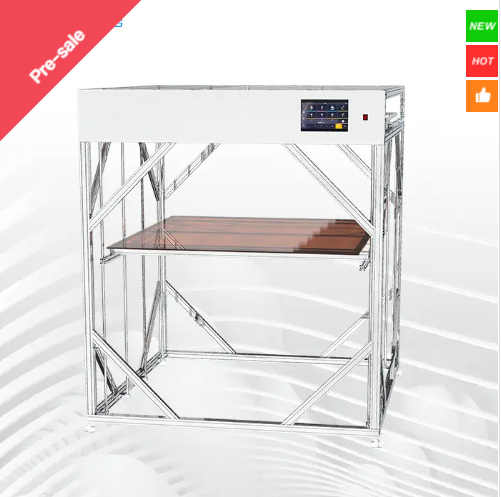
FDM, also known as Fused Filament Fabrication (FFF), is a 3D printing process where thermoplastic material is extruded through a heated nozzle and deposited layer by layer to create solid objects. Each layer of material fuses to the layer below it as it cools, forming a complete 3D object. This process is guided by a digital model, typically created in computer-aided design (CAD) software and sliced into layers for the printer to follow.
FDM technology was invented in the late 1980s by Scott Crump and has since evolved into one of the most accessible and commonly used 3D printing technologies worldwide.
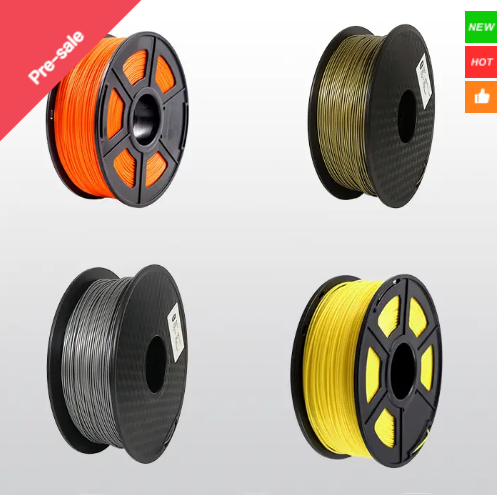
The materials used in FDM printing are typically thermoplastic filaments, which are available in spools and come in various diameters, such as 1.75mm or 2.85mm. The filament types commonly used in FDM printing include:
| Material | Strength | Temperature Resistance | Printability | Applications |
|---|---|---|---|---|
| PLA | Moderate | 60-65°C | Easy | Prototypes, models |
| ABS | High | ~105°C | Moderate | Functional prototypes, end-use parts |
| PETG | High | 85°C | Moderate | Durability-focused parts, prototypes |
Each filament has its characteristics in terms of strength, flexibility, and ease of use, which determines its suitability for different applications.
The FDM process begins with the creation of a digital model, typically in CAD software. Once the design is finalized, the model is sliced into horizontal layers, and the slicing software generates a set of instructions (G-code) for the 3D printer. The printer heats the thermoplastic filament to its melting point and extrudes it through a nozzle, depositing it in the shape of each slice.
As each layer is deposited, it cools and solidifies, fusing to the previous layer to build the object from the bottom up. The process repeats until the object is fully printed.
An FDM printer operates using two main systems: the cold end and the hot end. The cold end feeds the filament into the printer, while the hot end melts the filament and deposits it through the nozzle.
| Component | Function | Impact on Print Quality |
|---|---|---|
| Cold End | Feeds filament into the hot end | Controls material flow and ensures smooth extrusion |
| Hot End | Melts the filament for deposition | Determines extrusion temperature and material fusion |
The hot end typically includes heating cartridges and a nozzle, which extrude the melted filament in precise patterns. The extruded material is then laid down onto the build platform, and each new layer fuses to the one below it.
The printhead, which houses the nozzle, moves along the X, Y, and Z axes to accurately deposit the material. The movement of the printhead is controlled by stepper motors, linear guides, and other mechanical components. These precise movements are essential for ensuring that each layer is correctly aligned with the previous one, resulting in an accurate final part.
| Movement Axis | Function | Effect on Printing Precision |
|---|---|---|
| X and Y Axes | Horizontal movement | Affects accuracy and detail of the print |
| Z Axis | Vertical movement (layer height) | Controls the height of each layer and overall part resolution |
The build platform is where the object is formed, and it plays a crucial role in stabilizing the print as it's being built. The platform typically has a heated surface that helps with adhesion of the first few layers and reduces warping.
Cooling fans are often used to help cool the extruded material quickly, ensuring that the layers adhere properly and that the object maintains its shape during printing.
Warping occurs when the printed part's edges lift off the build platform due to uneven cooling, which creates internal stresses within the material. To prevent warping:
| Solution | Explanation |
|---|---|
| Heated build platform | Ensures consistent adhesion for the first few layers |
| Control the environment | Reduce drafts and maintain consistent temperature |
| Optimize design | Avoid large flat areas or narrow features prone to warping |
While FDM technology offers great versatility, layer adhesion can be a challenge. Each layer must bond effectively with the one below it to ensure structural integrity. Post-processing methods, such as sanding and vapor smoothing, can improve the surface finish and reduce the visibility of layer lines.
To ensure high-quality prints, it's essential to control various print settings, including:
| Setting | Effect on Print |
|---|---|
| Layer Height | Affects resolution and surface finish |
| Nozzle Temperature | Impacts material flow and layer bonding |
| Print Speed | Affects precision and surface quality |
The most common filaments for FDM 3D printing are:
| Material | Strength | Temperature Resistance | Applications |
|---|---|---|---|
| PLA | Moderate | 60-65°C | Prototypes, models |
| ABS | High | ~105°C | Functional prototypes, end-use parts |
| PETG | High | 85°C | Durability-focused parts, prototypes |
For more demanding applications, carbon fiber-infused filaments and nylon provide enhanced strength, while TPU offers flexibility for parts that need to bend or stretch. These materials are often used in industries like aerospace, automotive, and medical.
When choosing a filament, consider factors like:
| Criteria | Description |
|---|---|
| Mechanical Strength | How well the material can bear loads |
| Thermal Resistance | How the material performs under heat |
| Printability | How easy it is to print with the material |
FDM 3D printing is one of the most affordable 3D printing technologies available. Both the initial cost of FDM printers and the cost of materials (like PLA and ABS) are relatively low, making it an excellent option for both hobbyists and businesses looking to create functional parts at a low cost.
FDM printers are easy to set up and use, making them accessible for both beginners and professionals. The simplicity of the process, combined with affordable prices, makes FDM 3D printing ideal for personal use, educational purposes, and small businesses.
FDM technology is widely used in various industries, including automotive, aerospace, healthcare, and education. Its ability to create prototypes, functional parts, and low-volume production pieces makes it invaluable for companies looking to streamline their production process or develop custom solutions.
Sanding is a simple yet highly effective post-processing method that smooths rough surfaces and minimizes visible layer lines. It enhances both the appearance and tactile quality of FDM prints, making them more polished and professional. This technique is easy to apply and provides noticeable improvements in surface finish.
Painting is a great way to cover imperfections and enhance the visual appeal of FDM prints, allowing for a smoother, more uniform appearance. By applying epoxy coatings, you not only improve the aesthetics but also increase the part's durability. Epoxy coatings provide additional protection against wear and tear, while also giving the print a high-quality, glossy finish that is ideal for both functional and decorative applications.
For more complex projects, vapor smoothing and chemical baths are highly effective post-processing techniques to enhance the surface finish of 3D printed parts. These methods are particularly useful when working with materials like ABS, as they help to eliminate visible layer lines, improve smoothness, and strengthen the overall part. Vapor smoothing involves exposing the part to a solvent vapor, while chemical baths immerse the part in specific solutions to refine its texture and appearance.
While SLA provides higher precision and smoother surfaces, FDM offers a more cost-effective, versatile, and accessible solution for producing functional parts and prototypes.
SLS is more suitable for creating complex geometries and functional parts without the need for support structures. However, it is more expensive and requires more advanced equipment compared to FDM, which remains the more affordable and accessible option.
For simple prototypes, low-cost production, and large quantities, FDM is often the best choice. However, for high-precision or highly detailed parts, technologies like SLA or SLS may be more appropriate.
FDM 3D printing is one of the most accessible and versatile technologies in the industry. It allows businesses to create cost-effective, functional prototypes and custom parts, making it a go-to choice across various industries. As technology evolves, FDM is becoming more suitable for complex applications in aerospace, healthcare, and automotive sectors.
3D SHAPING leverages FDM printing in its product offerings, providing precision parts for industries such as automotive and medical. Their high-performance, cost-effective solutions help clients meet their production needs efficiently. When selecting an FDM 3D printer, consider material properties, print speed, and post-processing to achieve the best results for your project.
A: FDM 3D printing, or Fused Deposition Modeling, is an additive manufacturing process where thermoplastic filament is extruded layer by layer to create a solid object.
A: FDM printing works by heating thermoplastic filament, extruding it through a nozzle, and building up layers on a build platform, where each layer fuses to the one below it.
A: Common materials used in FDM 3D printing include PLA, ABS, PETG, and nylon, each offering different properties for various applications.
A: FDM 3D printing is popular due to its cost-effectiveness, accessibility, and versatility in creating prototypes and functional parts across industries.
A: FDM printing is affordable, easy to use, and offers material versatility, making it ideal for both prototyping and small-batch production.