


Fused Deposition Modeling (FDM) 3D printing is revolutionizing the way we create physical objects. By building items layer by layer, this process uses thermoplastic materials to produce functional prototypes and end-use parts. With its cost-effectiveness and accessibility, FDM has become one of the most popular 3D printing technologies.
In this article, we’ll explore how FDM works, its applications across industries, and the benefits it offers. You’ll also learn about its limitations and how to optimize the FDM process for the best results.
Cost-Effective: FDM offers a low-cost alternative for rapid prototyping, ideal for startups and small businesses.
Material Versatility: FDM supports a wide range of thermoplastics, allowing users to select materials based on performance needs.
Ease of Use: Desktop FDM printers are accessible and require minimal setup, making them ideal for hobbyists and educators.
Applications: From prototyping to small-scale manufacturing, FDM is used in various industries including automotive, aerospace, and medical.
Limitations: FDM has challenges with print quality, precision, and material properties compared to other 3D printing technologies.
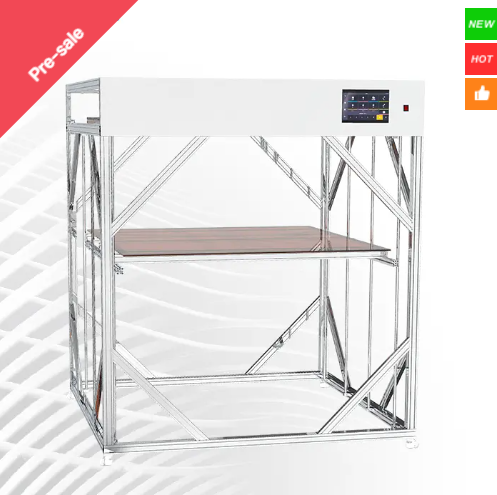
FDM, or Fused Deposition Modeling, is an additive manufacturing process that uses thermoplastic materials in filament form. It is sometimes referred to as FFF (Fused Filament Fabrication). In FDM printing, a printer melts the filament and extrudes it through a nozzle to build up parts layer by layer based on a 3D model.
Originally developed by Scott Crump in 1989, FDM has become one of the most widely used 3D printing methods. The process involves heating a plastic filament and extruding it onto a build platform, where each layer bonds to the one below it as the material cools.
The process begins with a digital design file, usually in the form of a 3D CAD model, that is sliced into multiple layers. The FDM printer reads these slices and deposits melted thermoplastic filament onto the build platform, layer by layer.
The thermoplastic materials most commonly used for FDM include PLA (Polylactic Acid), ABS (Acrylonitrile Butadiene Styrene), and PETG (Polyethylene Terephthalate Glycol). The extruder moves in the X, Y, and Z axes to create the part. Each layer of material cools and hardens before the next layer is deposited, ensuring the part's stability.
Print Head: The print head moves across the X, Y, and Z axes to deposit the melted filament.
Thermoplastic Filaments: Filaments such as PLA and ABS are commonly used for FDM printing. These filaments come in spools and are available in different diameters (typically 1.75mm or 2.85mm).
Layer-by-Layer Process: The material is extruded and laid down one layer at a time, with each layer bonding to the previous one.
FDM 3D printing offers an accessible and cost-effective solution for rapid prototyping, making it ideal for industries requiring quick iterations.
FDM printing is widely used in the development of rapid prototypes. Engineers and designers can quickly turn digital models into physical parts for testing and validation. This capability is invaluable in product development, as it allows for faster iterations, reduced design cycles, and improved product performance.
FDM’s low material cost and short printing times make it particularly suitable for prototyping. A designer can print multiple versions of a part quickly, helping to fine-tune a design before moving to more expensive manufacturing methods.
In addition to prototyping, FDM printing is also used in low-volume production and tooling. FDM offers the flexibility to produce functional parts with different material properties, such as ABS for toughness or PETG for chemical resistance. It's also used to create production aids like jigs, fixtures, and custom tools.
Industries like automotive and aerospace use FDM for manufacturing small batches of parts, such as brackets, housings, and functional prototypes that require high strength-to-weight ratios.
FDM 3D printing is popular in educational environments due to its affordability and ease of use. Schools, universities, and makerspaces often employ FDM printers to teach students about engineering and design principles. Similarly, hobbyists use FDM printers for personal projects, from custom gadgets to artistic creations.
As the technology becomes more accessible, it allows individuals to experiment with 3D printing without the need for large upfront investments.
Tip:For businesses looking to optimize their production workflows, FDM offers a great entry point due to its low initial investment and ease of use, especially for prototyping and small-scale production.
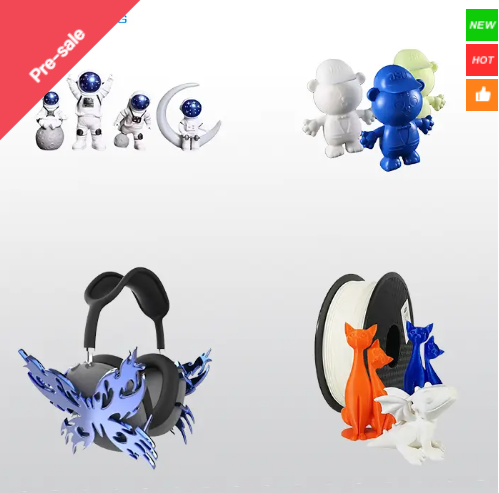
One of the primary reasons for FDM’s widespread adoption is its affordability. FDM printers are available at various price points, from desktop models for hobbyists to high-end industrial systems. The cost of filament materials is also relatively low compared to other 3D printing methods, making it an excellent choice for startups and small businesses.
The cost-effective nature of FDM printing makes it accessible to a wide range of users, including professionals, hobbyists, and educational institutions.
FDM printers support a wide range of thermoplastic materials, including PLA, ABS, PETG, and more specialized options like Nylon and TPU (Thermoplastic Polyurethane). This versatility allows users to choose materials based on their specific requirements, such as strength, flexibility, or heat resistance.
In addition to basic thermoplastics, composite materials like carbon fiber-infused filaments are also available, providing improved mechanical properties for high-performance applications.
FDM technology is known for its simplicity. Many desktop FDM printers are plug-and-play, requiring minimal setup and user expertise. The large community of FDM users provides support and resources for newcomers, making it easy for anyone to get started.
Additionally, FDM printers have fewer requirements for post-processing compared to other 3D printing methods, making them ideal for quick turnarounds in both prototyping and production.
FDM's cost-effectiveness and ease of use make it an excellent option for businesses that need rapid prototyping without a large investment.
FDM and SLA (Stereolithography) are two common 3D printing technologies, but they differ significantly in terms of print quality and material types.
| Property | FDM | SLA |
|---|---|---|
| Material Type | Thermoplastic filament | Liquid resin |
| Print Quality | Lower resolution, visible layer lines | Higher resolution, smooth finish |
| Cost | Low-cost, accessible | Higher cost, specialized |
| Speed | Faster for prototyping | Slower due to layer curing |
| Best Use | Prototyping and low-volume production | Fine details, jewelry, medical models |
FDM is more suitable for rapid prototyping and low-volume production, while SLA excels in applications requiring fine details and smooth finishes, such as jewelry and medical models.
FDM and SLS (Selective Laser Sintering) are both additive manufacturing methods, but they have distinct strengths and limitations.
| Property | FDM | SLS |
|---|---|---|
| Material Type | Thermoplastic filament | Powdered material (nylon, etc.) |
| Strength | Weaker along layers | Strong, isotropic parts |
| Cost | Low-cost, accessible | High-cost, industrial use |
| Precision | Lower precision | Higher precision |
| Best Use | Functional prototypes, small runs | Production parts, tooling |
FDM is ideal for functional prototypes and small runs, while SLS is better suited for production parts requiring high strength and durability.
When deciding between FDM and other 3D printing methods like SLA or SLS, consider factors like cost, material needs, and the level of detail required for your application.
One limitation of FDM is its relatively low precision compared to other methods like SLA. The layer-by-layer deposition can result in visible lines and slightly rough surfaces, particularly for detailed or intricate parts.
However, by adjusting printer settings like layer height and print speed, users can achieve better surface finishes. Post-processing techniques such as sanding or vapor smoothing can also help improve the appearance and surface quality of FDM prints.
Another limitation is the anisotropic nature of FDM parts. Since layers are deposited separately, parts are generally weaker along the layer lines compared to other printing methods. This can be a problem for parts that need to withstand mechanical stresses.
Designers should consider the mechanical properties required for each part and adjust the printing process accordingly to minimize these weaknesses.
When designing parts for FDM, ensure that the material properties align with the intended application, especially for parts requiring high strength or precision.
To optimize FDM printing, avoid large flat surfaces, which are prone to warping, and add fillets to sharp corners to reduce stress concentration. Ensuring proper adhesion between layers and minimizing the need for support structures can also improve the final part quality.
When designing, take into account the limitations of FDM, such as minimum feature size and nozzle diameter, to ensure the printed parts meet functional requirements.
Proper printer settings are essential for high-quality prints. Key parameters to control include nozzle temperature, print speed, layer height, and cooling fan speed. Regular maintenance, such as cleaning the extruder and calibrating the bed, is also crucial for consistent results.
By following these best practices, businesses can enhance the reliability and quality of their FDM prints.
FDM 3D printing has become a key technology for rapid prototyping, low-volume production, and educational projects. Its affordability, ease of use, and material versatility make it accessible to both hobbyists and professionals. While there are limitations in print quality and material properties, these can be addressed through design, settings, and post-processing. As the technology evolves, FDM will continue to play a crucial role in 3D printing. To maximize its potential, ensure that your design and printer settings are optimized for your specific needs.
3D SHAPING offers high-quality FDM 3D printing services, specializing in engineering-grade materials like Nylon, PETG, and ABS. Their advanced printers produce durable, high-precision parts for industries such as automotive and aerospace. Whether for prototypes or low-volume production, 3D SHAPING provides custom solutions that deliver excellent results.
A: FDM (Fused Deposition Modeling) 3D printing is an additive manufacturing process that creates objects by layering thermoplastic materials. The filament is melted and extruded through a nozzle to build up parts layer by layer.
A: FDM 3D printing uses a variety of thermoplastic materials, including PLA, ABS, PETG, Nylon, and TPU, each suitable for different applications like prototypes, functional parts, or flexible components.
A: FDM 3D printing is popular because it is cost-effective, easy to use, and versatile. It is widely used in prototyping, low-volume production, and educational projects due to its accessibility and affordability.
A: The main advantages of FDM 3D printing are its affordability, ease of use, and the ability to print with a wide range of materials. It is also great for rapid prototyping and creating functional parts.
A: FDM works by melting a thermoplastic filament and extruding it through a heated nozzle. The material is deposited layer by layer onto a build platform, where it cools and solidifies to form a complete object.