


Have you ever wondered how some of the most complex metal parts are made with precision? Selective Laser Melting (SLM) 3D printing has transformed manufacturing by enabling the creation of intricate, high-performance metal components.
In this article, we will explore the process of SLM, its key advantages, and the industries that benefit most. You will learn how SLM offers unparalleled design freedom, precision, and efficiency, making it ideal for industries like aerospace, automotive, and healthcare.
SLM Process: Uses a high-powered laser to selectively melt and fuse metal powder layer by layer, creating fully dense and precise parts.
Materials: SLM can process a variety of metals including stainless steel, titanium, aluminum, and nickel-based alloys, each suited for specific applications like aerospace, automotive, and healthcare.
Applications: Particularly beneficial in creating lightweight, complex parts for industries like aerospace, automotive, and medical, where design freedom and high performance are essential.
Challenges: Despite its advantages, SLM faces challenges such as high equipment costs, slow build rates, and the need for extensive post-processing.
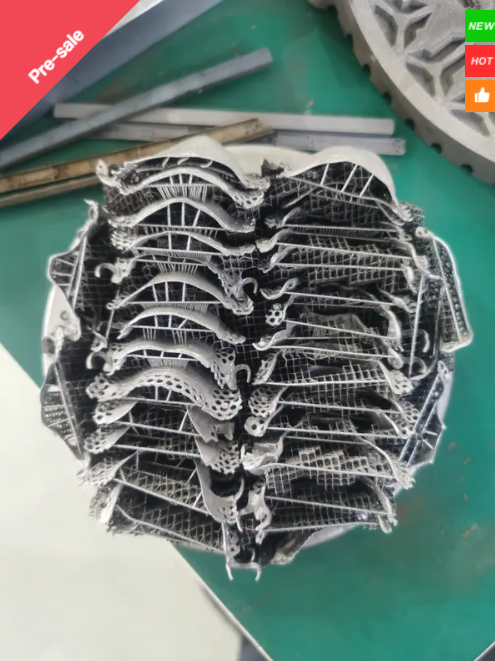
Selective Laser Melting (SLM) is a metal 3D printing process that utilizes a high-powered laser to melt and fuse layers of metal powder. This method allows for the creation of fully dense, complex metal parts directly from digital 3D models, without the need for molds or machining. SLM is a subset of laser powder bed fusion, where a laser scans over the powder bed, melting it to form each layer of the object.
SLM printing involves several steps to turn a digital design into a solid, functional part. Here’s how it works:
| Step | Description |
|---|---|
| Preparation | The first step involves creating a 3D model of the part using CAD software. |
| Powder Bed | A layer of metal powder is spread uniformly across the build platform. |
| Laser Melting | A laser beam melts the powder, fusing it layer by layer according to the CAD model. |
| Layer Building | After each layer is fused, the build platform lowers, and a new layer of powder is spread. |
| Cooling and Solidification | After printing, the part cools to solidify the metal and achieve the final shape. |
| Post-Processing | Support removal, heat treatment, and surface finishing are done after printing. |
SLM is often compared to other metal 3D printing technologies, especially Direct Metal Laser Sintering (DMLS). While both use similar laser-based techniques, the key difference lies in how the metal is processed. SLM fully melts the metal powder, resulting in parts with higher density and strength, whereas DMLS fuses metal powders without completely melting them. This gives SLM an edge when it comes to the mechanical properties of the finished part.
| SLM | DMLS |
|---|---|
| Fully melts metal powder | Fuses metal powder without full melting |
| Higher density and strength | Parts may have lower density and strength |
| Common in high-performance sectors (aerospace, automotive) | Primarily used for rapid prototyping |
SLM printing supports a wide variety of metals and metal alloys, each chosen for specific performance characteristics. The material used will significantly affect the part's mechanical, thermal, and functional properties.
| Material | Properties | Applications |
|---|---|---|
| Stainless Steel | Corrosion-resistant, durable | Medical devices, food processing, aerospace |
| Titanium Alloys | High strength-to-weight ratio, biocompatible | Aerospace, medical implants |
| Nickel-Based Alloys | High-temperature resistance, strong mechanical properties | Gas turbines, aerospace components |
| Cobalt-Chrome Alloys | Wear-resistant, high strength | Dental implants, medical devices |
| Aluminum Alloys | Lightweight, corrosion-resistant | Automotive, aerospace, consumer goods |
Different materials offer varying advantages depending on the required application:
Strength and Durability: Titanium and nickel alloys are known for their high tensile strength, making them suitable for aerospace and automotive applications where strength is paramount.
Heat Resistance: Superalloys such as Inconel perform exceptionally well under high-temperature conditions, which is critical for turbine components.
Corrosion Resistance: Stainless steel is widely used in medical and food industries due to its resistance to corrosion and oxidation.
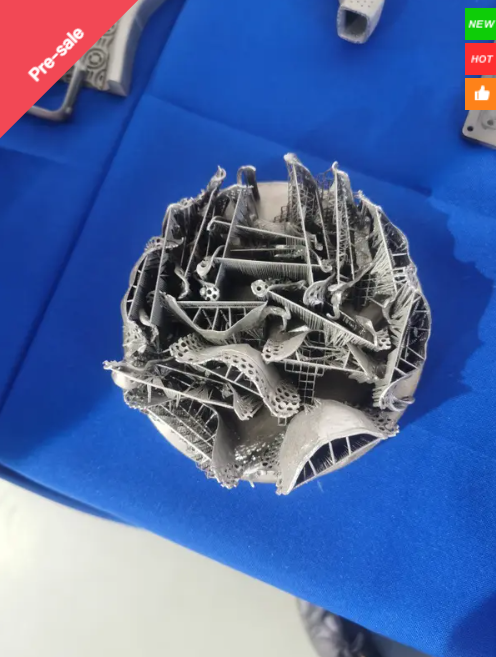
SLM offers several key advantages over traditional manufacturing processes, making it a powerful tool for industries that demand high precision and performance.
SLM allows designers to create parts with complex geometries, internal structures, and lightweight features that would be nearly impossible to achieve with conventional machining. For instance, aerospace components can be printed with internal cooling channels or intricate lattice structures that reduce weight without compromising strength.
| Advantage | Description |
|---|---|
| Design Freedom | Ability to create complex geometries and internal structures. |
| Precision | High accuracy, down to ±0.05mm, suitable for tight-tolerance components. |
SLM is an additive manufacturing process, meaning that material is only deposited where it is needed. This eliminates the excess material waste common in subtractive methods like CNC machining. Additionally, since no molds or tooling are required, the upfront costs are significantly lower.
SLM enables rapid prototyping and fast iteration of designs. Parts can be produced quickly from a digital file, which significantly reduces lead times. This is especially beneficial for industries that need to test and refine parts rapidly, such as automotive and aerospace. Furthermore, SLM allows for mass customization, making it ideal for applications like medical implants, where each part needs to be tailored to a specific patient’s needs.
While SLM offers many benefits, there are some challenges that need to be considered before adopting this technology.
SLM parts often have a rough surface finish due to the nature of the additive process. Post-processing steps like polishing, machining, or blasting may be required to achieve the desired surface smoothness. This adds to the overall cost and time required to finish a part.
SLM machines can be expensive to purchase and maintain, with prices ranging from several hundred thousand to over a million dollars for industrial systems. Additionally, the size of parts that can be produced is limited by the build volume of the machine, which can be a constraint for larger components.
The high heat input and rapid cooling during the SLM process can lead to residual stresses within the part. This can result in warping or cracking, especially for large or complex parts. Post-processing techniques like heat treatment or hot isostatic pressing (HIP) are often used to relieve these stresses.
SLM is revolutionizing several industries by enabling the production of complex, high-performance parts. Below are a few key applications:
SLM is widely used in the aerospace industry to manufacture lightweight components that maintain structural integrity. Parts like turbine blades, brackets, and fuel nozzles benefit from the design flexibility and material properties offered by SLM. The ability to integrate internal cooling channels within these parts also enhances performance.
SLM has had a transformative effect on medical device manufacturing. Custom implants, prosthetics, and surgical tools can be produced to exact specifications, ensuring a perfect fit for individual patients. Titanium alloys like Ti-6Al-4V are often used due to their biocompatibility and strength, crucial for long-term implant success.
In the automotive sector, SLM is used to create high-performance engine components, such as cylinder heads and cooling systems, with intricate internal geometries. SLM also allows for rapid prototyping and small-batch production of complex tooling parts, improving manufacturing efficiency.
Once the SLM process is complete, parts often require additional post-processing steps to improve material properties, surface quality, and overall performance.
| Technique | Description |
|---|---|
| Heat Treatment | Relieves internal stresses and improves material strength. |
| Support Removal | Supports are removed using mechanical or wire EDM methods. |
| Surface Finishing | Polishing, sandblasting, or shot peening to achieve smooth surfaces. |
Post-processing can add significant time and cost to the overall production process. The removal of support structures, in particular, can be labor-intensive, and achieving the desired surface finish may require multiple steps.
SLM 3D printing is a revolutionary technology that provides design freedom and precision for creating high-performance metal parts. Despite challenges like equipment costs and material limitations, its benefits, such as reduced material waste, speed, and customization, make it invaluable to industries like aerospace, automotive, and healthcare. As SLM technology evolves, its role in the future of manufacturing will continue to grow.
For businesses adopting SLM, it’s important to balance the benefits with costs, especially for large-scale production. Post-processing investments are key to enhancing part quality and precision. 3D SHAPING's range of SLM machines delivers exceptional precision and handles complex metal components, reducing post-processing needs and offering faster production cycles.
A: SLM 3D printing is a metal additive manufacturing technology that uses a laser to melt metal powder, creating high-performance parts layer by layer. It offers design freedom and precision, especially for complex geometries.
A: SLM works by spreading metal powder across a build platform, using a laser to melt and fuse it according to a CAD design. The process is repeated layer by layer until the part is fully formed.
A: SLM offers benefits like reduced material waste, faster production, and the ability to create complex geometries that are hard to achieve with traditional methods. It's widely used in aerospace, automotive, and medical industries.
A: SLM 3D printing supports various metal powders, including stainless steel, titanium, aluminum alloys, and nickel-based superalloys, offering versatility for different applications.