


Views: 0 Author: Site Editor Publish Time: 2025-11-15 Origin: Site


Fused Deposition Modeling (FDM) is one of the most popular 3D printing technologies, especially in the consumer and industrial sectors. This process uses thermoplastic filaments that are heated and extruded through a nozzle, building parts layer by layer. The flexibility to choose different materials is one of the reasons FDM 3D printing is so versatile.
In this article, we will explore the most common materials used in FDM 3D printing and discuss their unique properties. You will learn which material is best suited for your specific project needs, whether you're printing simple prototypes or durable, functional parts.
Material Variety: FDM offers a range of materials, from biodegradable PLA to high-performance plastics like PEEK.
Ease of Use: Materials like PLA and PETG are beginner-friendly, while tougher materials like ABS and Nylon are ideal for functional parts.
Advanced Applications: Materials such as carbon fiber composites and high-performance plastics offer solutions for aerospace, automotive, and medical industries.
Support Materials: Soluble supports, like PVA and HIPS, simplify the creation of complex geometries with FDM printers.
Customization: 3D SHAPING's advanced filaments and high-end printers allow businesses to create customized parts with specific mechanical and thermal properties.
| Material | Features | Applications | Pros | Cons |
|---|---|---|---|---|
| PLA | Biodegradable, easy to print, low heat resistance | Prototypes, visual models | Easy to print, environmentally friendly | Brittle, low heat resistance |
| ABS | Heat-resistant, durable, impact-resistant | Functional prototypes, consumer products | Strong, heat-resistant, post-processable | Produces fumes, requires ventilation |
| PETG | Chemical resistance, food-safe, flexible | Waterproof components, snap-fit parts | Strong, easy to print, recyclable | Heavier than PLA, not as strong as ABS |
Features:
PLA is a biodegradable thermoplastic that is easy to print and offers good visual quality. It is rigid and strong but relatively brittle compared to other materials like ABS. PLA is made from renewable sources like corn starch or sugarcane, which makes it a more environmentally friendly option.
Applications:
Concept models
Prototypes with good aesthetics
Educational and consumer product design
Pros and Cons:
Pros: Odorless, easy to print, and available in a wide range of colors.
Cons: Low heat resistance and poor performance under humid conditions. It can also be brittle under stress.
PLA is great for visual models but should not be used for parts requiring high mechanical strength or heat resistance.
Features:
ABS is a tough and durable thermoplastic known for its excellent heat resistance and impact strength. It is commonly used in professional 3D printing applications, including automotive parts and household items. It is best printed with a heated bed to prevent warping during cooling.
Applications:
Functional prototypes
End-use parts that require toughness and high heat resistance
Consumer products
Advantages:
Pros: Strong, heat-resistant, can be post-processed (e.g., acetone smoothing for a glossy finish).
Cons: Produces fumes while printing, so it requires good ventilation.
ABS is a solid choice for tough, high-heat parts, but make sure to have adequate ventilation.
Features:
PETG is an excellent material for users who need the strength of ABS but with better ease of printing. It has good resistance to chemicals, humidity, and is food-safe, making it ideal for applications that require durability and safety.
Applications:
Waterproof components
Snap-fit parts
Containers for food or liquids
Comparison to PLA and ABS:
PETG is more durable and flexible than PLA, with better chemical resistance, but it's easier to print than ABS.
PETG is a great all-around material if you need strength and flexibility without the hassle of ABS.
| Material | Features | Applications | Pros | Cons |
|---|---|---|---|---|
| Nylon | Strong, durable, impact-resistant | Mechanical components, gears | High impact resistance, chemical resistance | Moisture absorption, difficult to print |
| TPU | Flexible, abrasion-resistant | Vibration dampeners, gaskets | Flexible, impact-resistant | Difficult to print, low-speed required |
| PC | High strength, heat-resistant | Engineering prototypes, transparent parts | Durable, can withstand high temperatures | Requires high printing temperatures |
Features:
Nylon is known for its excellent mechanical properties, particularly its high impact resistance. It is commonly used in applications where toughness and durability are crucial, such as gears, bearings, and mechanical components.
Applications:
Wear-resistant parts
Automotive components
Functional mechanical parts
Challenges in Printing:
Cons: Nylon is hygroscopic, meaning it absorbs moisture from the air, which can affect print quality and mechanical properties. It's also challenging to print due to its tendency to warp.
Store Nylon filaments in a dry environment to prevent moisture absorption, which can affect print quality.
Features:
TPU is a flexible and abrasion-resistant material known for its high impact strength. It's ideal for creating parts that need to withstand wear and tear, such as gaskets, seals, and soft-touch products.
Applications:
Flexible parts
Vibration dampeners
Wear-resistant coatings
Challenges in Printing:
Cons: TPU can be difficult to print with, as it requires slower print speeds to avoid issues like jamming. The flexibility of TPU can also make it harder to achieve clean prints.
Use a slower print speed and ensure your extruder is compatible with flexible filaments for optimal results.
Features:
Polycarbonate is one of the strongest materials available for FDM printing, offering excellent heat resistance and strength. It's ideal for applications that require durability and transparency, such as protective covers or engineering prototypes.
Applications:
Engineering prototypes
Transparent parts
High-stress applications
Limitations:
Cons: PC requires a high printing temperature and a heated bed to avoid warping. It is also more challenging to print compared to materials like PLA and ABS.
PC is perfect for parts that need to withstand high temperatures and mechanical stress but requires a high-end printer.
| Material | Features | Applications | Pros | Cons |
|---|---|---|---|---|
| Carbon Fiber Composites | Lightweight, high strength | Aerospace parts, structural components | Excellent strength-to-weight ratio | Requires specialized equipment |
| Wood Infused Filaments | Aesthetic, wood-like finish | Decorative items, models | Unique appearance, easy to print | Requires post-processing for best results |
Features:
Carbon fiber-infused filaments are lightweight yet extremely strong, making them ideal for applications in aerospace and automotive industries. These filaments combine the rigidity of plastic with the strength of carbon fibers, making them perfect for functional parts that require high mechanical strength.
Applications:
Aerospace parts
Structural components
Lightweight mechanical parts
Benefits:
Pros: High strength-to-weight ratio, excellent stiffness, and strength.
Cons: Requires specialized equipment to print, as carbon fiber can damage standard nozzles.
Tip: Carbon fiber composites are great for industries that require both strength and lightness in their parts.
Features:
Wood and metal-infused filaments offer a unique aesthetic, combining the appearance of wood or metal with the printability of plastic. These materials are ideal for decorative items and parts that require a high-quality finish.
Applications:
Decorative parts
Sculptural elements
Model making
Limitations:
Cons: These filaments often require post-processing, such as sanding or polishing, to achieve a smooth finish.
Use wood or metal-infused filaments for aesthetic applications, but be prepared for additional post-processing.
| Material | Features | Applications | Pros | Cons |
|---|---|---|---|---|
| PVA | Water-soluble, used for supports | Complex geometries, multi-material prints | Easy to remove, excellent for intricate parts | Must be stored dry |
| HIPS | Soluble in limonene, supports ABS printing | Large parts, complex designs | Great for large, intricate models | Requires limonene for dissolution |
Features:
PVA is a water-soluble filament used as a support material for complex parts with intricate geometries. It's ideal for parts that require detailed support structures that can be removed without affecting the print.
Applications:
Complex geometries
Multi-material prints
Intricate models
Best Practices:
PVA is ideal for dual-extruder printers, allowing one extruder to print the model and the other to print the support material.
Features:
HIPS is commonly used with ABS for support structures. It dissolves in limonene, making it a convenient support material for complex parts.
Applications:
Support material for ABS prints
Complex and large parts requiring support
Usage Tips:
Use HIPS for large or intricate parts that require dissolvable support for a smoother finish.
Features:
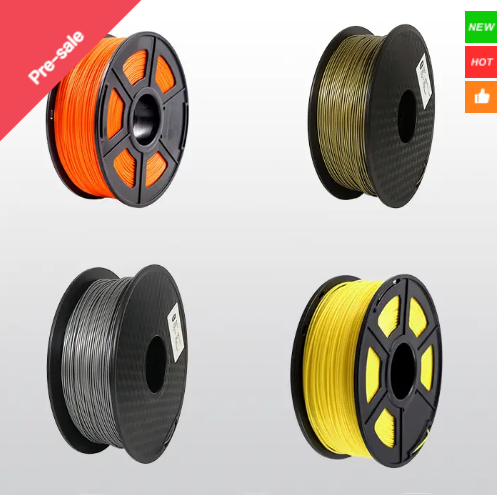
High-performance plastics like PEEK, PEKK, and ULTEM offer outstanding mechanical strength, heat resistance, and chemical resistance. These materials are suitable for industries that require parts to endure harsh conditions, such as aerospace, automotive, and medical.
Applications:
Aerospace components
Automotive parts
Medical devices
Considerations:
These materials require high-end 3D printers capable of reaching elevated temperatures, typically 350°C or higher.
Choosing the right material for your FDM 3D printing project is essential for achieving the desired results. From basic prototypes using PLA to advanced aerospace components with carbon fiber composites, FDM 3D printing offers materials for every need. Understanding each material’s strengths and limitations allows you to make informed decisions for your projects. As FDM technology evolves, new materials will continue to expand possibilities across industries. Whether for simple or complex parts, there is a material that fits your needs.
3D SHAPING offers a range of high-performance filaments, ensuring exceptional durability and functionality for industries like aerospace, automotive, and medical. Their products deliver value by providing reliable materials that meet demanding requirements.
A: FDM 3D printing uses thermoplastic filaments like PLA, ABS, PETG, Nylon, TPU, and high-performance plastics such as PEEK. Each material has unique properties suited for different applications.
A: Material selection is critical in FDM 3D printing because it determines the final product's durability, flexibility, and heat resistance, affecting functionality and appearance.
A: Yes, FDM 3D printing supports composite materials like carbon fiber and metal-infused filaments, providing enhanced strength and lightweight properties for demanding applications.
A: TPU (Thermoplastic Polyurethane) is the best material for flexible parts in FDM 3D printing due to its flexibility, abrasion resistance, and high impact strength.
A: The cost of FDM 3D printing varies based on material type, with high-performance plastics and composites generally being more expensive than standard materials like PLA and ABS.